Need Assistance? Call us today! 602-478-9713
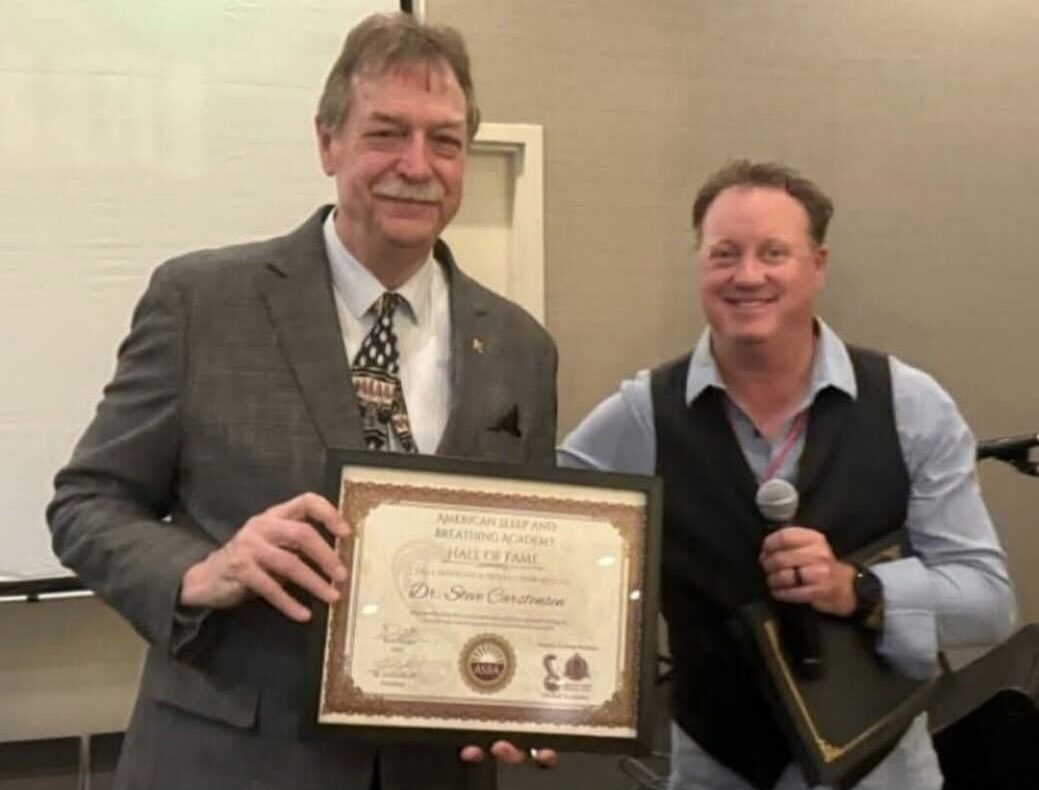
The American Sleep and Breathing Academy (ASBA) has proudly inducted Dr. Steve Carstensen into its Hall of Fame, recognizing a career built on innovation, education, and a relentless commitment to advancing the field of dental sleep medicine. Dr. Carstensen was the very first Board President for ASBA. He has been with the academy since the beginning. His diplomate certificate is numbered 00003. Click Here To See Dr. Steve Carstensen Showing Us His Award!
Dr. Carstensen’s journey into sleep medicine was shaped by both personal experience and professional mentorship. Inspired by his father’s battle with severe sleep apnea and guided by pioneers like Dr. Keith Thornton, he found his calling. With advanced training from respected institutions such as the Pankey Institute, UCLA, and the Pride Institute, Dr. Carstensen blended education, leadership, and clinical excellence into a path that has impacted thousands of lives.
Reflecting on his career, Dr. Carstensen has witnessed the field evolve—but also acknowledges that there’s still work to be done. “We’re still too focused on managing adult symptoms with oral devices, and not enough on understanding and addressing the root causes, especially in children,” he says.
One pivotal moment that shaped his clinical philosophy involved his own father, whose subjective improvement with a mandibular advancement device (MAD) didn’t align with objective testing results. “That taught me we can’t just go by how people feel. We need solid data to be responsible providers.”
Dr. Carstensen also points out that many dentists miss critical signs of sleep apnea because they stop listening after hearing requests for a “snoring appliance.” True diagnosis and effective treatment, he says, require a deeper dive—into medical history, subtle symptoms, and comprehensive testing.
When it comes to treating pediatric versus adult cases, Dr. Carstensen takes a collaborative and developmental approach. He works closely with pediatric dentists, orthodontists, speech pathologists, and myofunctional therapists to help children avoid the long-term effects of compromised breathing during growth. Adults, on the other hand, often require more invasive management due to years of damage already done.
Looking ahead, Dr. Carstensen is particularly excited about how early dentists can now recognize underdevelopment of the craniofacial respiratory complex. “We’re starting to offer real, preventative solutions instead of reactive ones,” he says. He envisions a future where airway screening becomes as routine in dentistry as checking for cavities.